


Ball Sort Magic: Color Puzzle
4.81.47K Reviews
App Specs
- Version
- 1.0.14
- Updated On
- License
- Free
- Downloads
- 10,000,000+
- Developer
- Passion Fruit Joy
- Categories
- Casual
- Platform
- Android
Screenshots

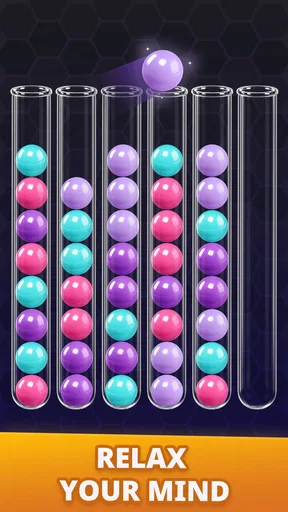
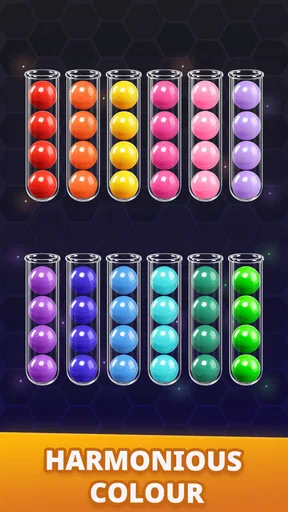
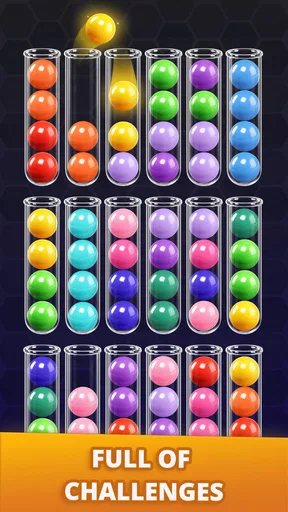
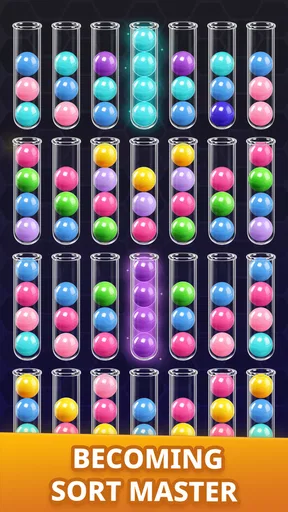
 Analysis by AppCompare
I’d approach Ball Sort Magic: Color Puzzle as a small, low-pressure puzzle to dip into rather than a game that asks for a long session. Its appeal is easy to understand: move colored balls between tubes until each tube contains a single color. That familiar sorting idea gives a new player a clear first goal, while leaving room to think ahead once the arrangement gets crowded. I find that combination reassuring when I want a game I can understand at a glance but still need to pay attention to.
What to expect from a color-sorting puzzle
This is a casual game from Passion Fruit Joy, built around a single puzzle concept rather than a story or a set of activities to learn. The first few moves are intuitive: choose a ball at the top of one tube, then move it to a tube where it can go. The challenge comes from deciding which move will keep useful space open. A move can look tidy in the moment and still make the rest of the puzzle harder, so I recommend treating empty room as a resource, not just a temporary convenience.
The game is free, rated for Everyone, and has an average rating of 4.8 from around 31,000 ratings. It has passed 10 million installs, which suggests the simple format has broad appeal. It was released on May 20, 2025, and version 1.0.11 is listed for devices running Android 8.0 or later. Those details are useful if you are checking whether it fits your phone and whether you are comfortable trying a free casual game.
Before installing, it helps to know what kind of satisfaction this puzzle offers. You are not collecting a team, building a world, or competing through a fast series of rounds; the reward is seeing a tangled set of colors become orderly through your own choices. I like that direct payoff, but players who need frequent changes of pace may find the central mechanic repetitive. It works best when the act of planning and clearing a board is itself enough to hold your attention.
A calm first run, with a little planning
When you open the game, the soft-looking presentation makes it feel approachable. I would start by focusing on the topmost balls and checking which tubes can accept them, rather than moving quickly just because a destination is available. Keeping one tube open, when the puzzle allows it, gives you room to rearrange colors later. That small habit is more useful than trying to solve the whole board in your head from the first move.
The game’s stated offline play is particularly practical for a short session away from a reliable connection. I could see myself opening it while waiting for a train or sitting through a quiet break, then putting the phone away without needing to follow a plot or remember a sequence of objectives. There are no time limits, so a pause to inspect the board is part of the experience rather than a failure to keep up. That also makes it a gentler choice for someone who prefers puzzles at their own pace.
How to get to the first satisfying clear
For a first attempt, I would use a simple routine: identify a color that is already grouped near the top, move it only when the destination is legal, and avoid filling every spare tube too soon. After each move, take a second to ask whether you have made another color easier to reach or merely shifted the blockage elsewhere. The first completed color group is a useful milestone because it shows how freeing one tube can simplify the remaining choices.
Worth Reading Before You Choose

EA SPORTS FC Mobile 26 Is a Bigger Football Game, but It Takes Time

Flipboard Shows What News Apps Must Do Beyond the Feed

Switching to Android Auto Means Rethinking Your Driving Routine

Google Calendar Makes a Crowded Week Easier to Manage

Ludo King Makes the Most of the Minutes Between Plans

Baby Panda World Brings Quick Play to Modern Phones, but Its Game Library Feels Busy
If a move traps a color or leaves you unsure, the undo option makes experimentation less punishing. I would use it to compare two possible routes, not just to erase every imperfect move automatically. Seeing how a choice changes the available space can teach you to spot bottlenecks on later boards. This is one of the more helpful ways to approach a sorting puzzle: treat a reversible mistake as information, then choose a better plan.
There is a trade-off in that forgiving setup. Undo can reduce frustration, but leaning on it after every uncertain move may turn the puzzle into trial and error instead of planning. I get more out of the game by first tracing a few moves mentally and using the button only when the board has become difficult to read. That keeps the pace relaxed while making a successful clear feel earned.
Getting Started with the Game
The first thing you’ll notice upon launching Ball Sort Magic: Color Puzzle is its simple yet captivating design. The interface is easy on the eyes with its soft colors and smooth animations. This makes it super inviting, especially when you’re looking for a casual game to unwind with. Setting up is a breeze, and you’ll be sorting those colorful balls in no time.
The Gameplay Experience
Now, onto the juicy details of the gameplay. The premise is straightforward: you’ve got a series of tubes filled with multicolored balls, and your job is to sort them by color. Sounds simple, right? Well, don’t be fooled. The game starts off easy to get you into the groove, but as you progress, it ramps up the difficulty, making it a real brain teaser.
One of the things I absolutely love about this game is how it strikes a balance between relaxation and challenge. It’s like a zen puzzle that keeps your mind engaged without overwhelming you. Whether you’re on a quick coffee break or winding down before bed, this game fits perfectly into any schedule.
Features that Stand Out
What’s a game without some cool features, right? The game doesn’t disappoint. Here are a few highlights that really stood out to me:
- Endless Levels: You’ll never run out of puzzles to solve. The game keeps dishing out new combinations, ensuring you’re always entertained.
- Undo Button: Made a wrong move? No worries, just hit the undo button and try again. It’s a lifesaver in those tricky levels!
- No Time Limits: Take your time figuring out each puzzle. There’s no rush, which is perfect for those who enjoy a more leisurely pace.
- Offline Play: Got no internet? No problem. You can play this game wherever you are, anytime.
Design and Aesthetics
Let’s talk about the visuals because, honestly, they’re a big part of what makes this game so enjoyable. The colors are vibrant but not overwhelming, creating a soothing experience as you play. The balls have a satisfying bounce and roll to them, which adds a nice tactile feel to the game. It’s clear that a lot of thought went into making this game visually appealing without being flashy.
Why You Should Try It
If you’re still on the fence about giving this game a go, let me give you a nudge. It’s a fantastic game for anyone who loves puzzles, enjoys a splash of color, and appreciates a game that respects your time. Plus, it’s free to download, so you’ve got nothing to lose by trying it out!
In conclusion, this app is a delightful mix of fun and challenge, wrapped up in a beautiful package. It’s easy to pick up, hard to put down, and perfect for all ages. So, what are you waiting for? Dive into the colorful world of ball sorting and let me know what you think!
Where it fits among everyday games
Compared with a word puzzle, a match-three game, or a quick arcade challenge, this one asks for fewer kinds of decisions but gives each move more weight. You do not need to scan for a score opportunity or race against a clock; you need to manage order and available space. That makes it a good fit for someone who likes visual logic and wants a clear stopping point. If you mainly enjoy variety, story progression, or social competition, another casual game will probably keep you engaged longer.
A realistic use for me would be opening it during a short wait when I have enough attention to plan but do not want to commit to a longer game. I can make a few moves, pause when called, and return to a board whose goal is immediately visible. Offline access makes that kind of use more dependable in places where a connection is patchy. For a crowded commute, though, I would be cautious: a bump or an accidental tap can interrupt careful play, and this puzzle is more satisfying when I can look at the tubes clearly.
Small habits that make tricky boards easier
One useful way to reduce avoidable backtracking is to avoid splitting a nearly complete color group unless doing so opens a route that matters. The visible top balls are only part of the problem; a color buried underneath may need a temporary path before it can be gathered. I try to identify which colors are blocking access and use spare capacity to expose them, rather than treating every tube as if it should be completed as soon as possible.
Another practical habit is to pause whenever a move would use the last obvious open space. Ask what you will do next if the newly exposed ball cannot go where you want. This quick check can prevent a board from becoming cluttered with partial stacks that all need the same scarce destination. It is a small planning step, but it is more effective than relying on undo as the main strategy.
Because the play is unhurried, I also find it useful to set a natural stopping point: finish the current board if I am close, or leave a difficult arrangement for another break instead of tapping through it while distracted. That is not a special feature; it is simply a way to keep a relaxing puzzle from becoming a source of irritation. Players who like to think through a sequence will appreciate this slower rhythm more than people looking for constant stimulation.
Who will enjoy it, and who may want something else
I would recommend it to people who enjoy sorting, color-matching logic, and puzzles that can be understood without a tutorial-heavy setup. It is also approachable for a family audience, with an Everyone content rating, although the best experience depends on whether each player enjoys taking time over a board. A first-time player can learn the basic objective quickly, then improve by noticing how one empty tube can protect several future options.
I would be less likely to suggest it to someone who wants every session to introduce a new mechanic, or who prefers direct competition and visible score chasing. A dedicated logic game with varied puzzle types may suit that player better. Likewise, if you find repeated sorting tasks dull even when the arrangement changes, the core loop here may not overcome that preference. The strongest reason to try it is liking the act of arranging and planning, not expecting a broad collection of different activities.
There is also a useful distinction between “relaxing” and “effortless.” The lack of a timer keeps the game from pressuring you, but a crowded board can still demand concentration. I would not choose it when I need something completely mindless; I would choose it when I want a calm task that occupies a little attention. That difference helps set expectations before the first session and makes the game’s measured pace feel like a strength rather than a surprise.
What to keep in mind after the first clear
Once the early puzzles feel comfortable, try shifting from “which move can I make?” to “which move preserves the most options?” That question helps as the arrangements become more demanding and gives each spare space a clear purpose. If you get stuck, undo one move at a time and look for the point where the board lost flexibility; rebuilding from there is usually more informative than starting over mentally from the beginning.
My overall take is that this is a focused, easy-to-enter color-sorting game with a calm pace and a familiar objective. Its best qualities are the readable visual presentation, the freedom to think without a countdown, and the convenience of offline play. Its main limitation is the same focus: if you want varied modes or a changing set of activities, the repeated tube-sorting mechanic may feel narrow. For a free casual puzzle that suits short, thoughtful breaks, I think it is worth trying; just go in for the careful little decisions rather than expecting a larger adventure.
Pros
- Intuitive controls make it easy to play.
- Visually appealing with vibrant colors.
- Challenging levels increase engagement.
- Offline mode available for on-the-go play.
- Minimal ads enhance user experience.
Cons
- Lacks a multiplayer mode for social play.
- Difficulty spikes can be frustrating.
- Limited hints may stall progress.
- Repetitive music can become annoying.
- In-app purchases can be expensive.
FAQs for Ball Sort Magic: Color Puzzle
What is Ball Sort Magic: Color Puzzle?
Ball Sort Magic: Color Puzzle is a challenging and addictive sorting game where players need to organize colored balls into their respective tubes. It’s designed to test your strategic thinking and problem-solving skills as you progress through increasingly difficult levels.
Is Ball Sort Magic: Color Puzzle free to play?
Yes, Ball Sort Magic: Color Puzzle is free to download and play. However, it may offer in-app purchases for additional features or to remove ads. Be sure to check your device's app store for specific details on any potential costs.
How do the game controls work in Ball Sort Magic: Color Puzzle?
The game features intuitive controls. Players tap a tube to select a ball and then tap another tube to move the ball into it. The goal is to sort the balls by color into their respective tubes. The simplicity of the controls makes it accessible for players of all ages.
Can I play Ball Sort Magic: Color Puzzle offline?
Yes, Ball Sort Magic: Color Puzzle can be played offline. This makes it a great option for those looking to enjoy the game without needing an internet connection, such as during travel or in areas with limited connectivity.
Are there any ads in Ball Sort Magic: Color Puzzle?
Ball Sort Magic: Color Puzzle may contain ads, which is common in free apps. These ads help support the developers. Players may have the option to remove ads through an in-app purchase, providing an uninterrupted gaming experience.


